Soft Fascination: How Nature Helps Your Brain Recover
A closer look at the science of Soft Fascination and how nature helps our brain recover
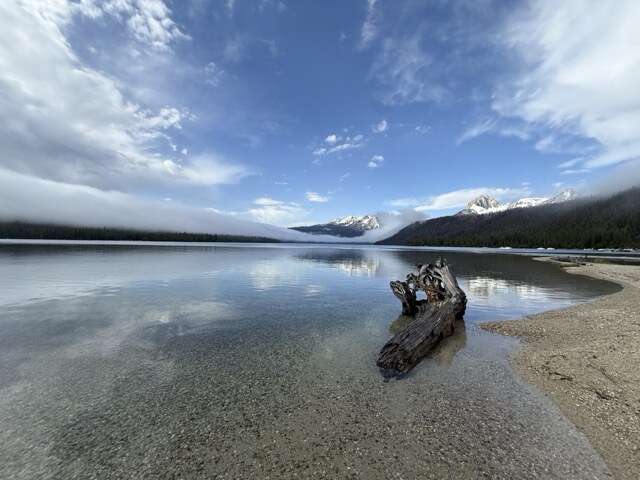
Every morning when I’m here in central Idaho, I walk on the beach along the lake in front of the cabin where I stay. During that walk, I am always continuously drawn into the natural environment around me: the ripples on the water, the reflection of the mountains, the small changes in water level, the scent of the pines and trees. I get to the end of the beach where the river flows out, and I end up just staring at the water rushing by. I never get bored with it, and even on the hardest days when I feel the most stressed, I always feel at least a little restored.
One possible explanation for this is what researchers call “Soft Fascination,” and it can be one of the keys to why moments in nature can feel so restorative.
The concept comes from environmental psychologists Rachel and Stephen Kaplan’s late-1980s work on Attention Restoration Theory, especially their 1989 book The Experience of Nature, and was further developed in Stephen Kaplan’s 1995 integrative framework. Their idea was that certain environments have a specific quality that allows the mind to rest and recover.
The Kaplans described a restorative environment as having four qualities: a sense of being away from your usual demands, enough extent or richness to feel like a whole world you can get lost in, fascination that holds your attention without effort, and compatibility — this is about feeling enjoyment and connection with the environment around you. (Kaplan)
Soft Fascination vs Hard Fascination
We have all felt the difference between these two different mental states. Think about your last Netflix binge, spending hours scrolling on your phone, or even just getting sucked into a big work project. These keep pulling your attention in; however, it feels depleting, and you come away drained.
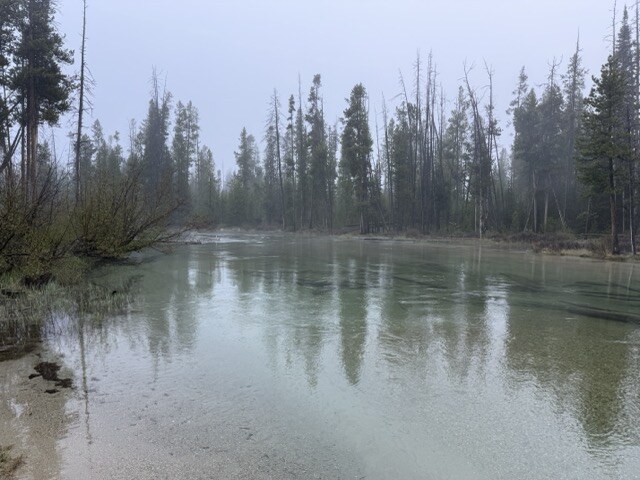
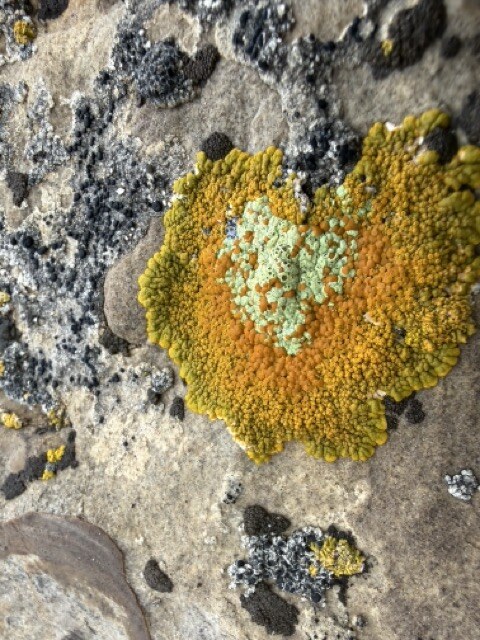
Soft fascination is different. It is watching a stream flow by, noticing the rustle of the leaves, or the color of a flower. Nature gently pulls you out of your head and into your surroundings. You might be pulled back into your head, and that's fine, but it will keep on gently reminding you to bring your focus outside of your body. I personally have noticed that a novel environment can make this pull even stronger, fully immersing yourself in the nature around you.
The difference isn’t just about how each feel in the moment. It comes down to what’s happening in your brain. Modern life — work, screens, traffic, decisions — requires what researchers call directed attention: effortful, voluntary focus that requires you to actively push distractions aside. That capacity fatigues with sustained use, just as a muscle does. Nature, and soft fascination specifically, engages what researchers call involuntary or bottom-up attention, which instead of fatiguing you, gives your directed attention system a chance to recover. (Berman et al.)

Some of the Science
The research on nature exposure and mental restoration is growing — and while it is not all definitive, the evidence generally supports what I feel in my own body and mind.
One of the landmark studies came from Berman, Jonides & Kaplan, who had participants walk for about 50 minutes in either a natural setting or a busy urban environment, then complete cognitive tests. People who walked in nature showed significantly better scores on measures of attention and working memory than those who walked in the city — regardless of season or weather. (Berman et al.)
Even much shorter exposures appear to matter. A University of Michigan-led study found that cortisol appeared to drop most efficiently during nature experiences lasting about 20 to 30 minutes, with additional benefits continuing more slowly after that. (Hunter et al.)
Also, at the other end of the spectrum, one study found that simply glancing at a green roof view for as little as 40 seconds was enough to produce a measurable improvement in sustained attention compared to looking at a bare concrete surface. (Lee et al.)
Zooming out to a weekly picture, a large study of nearly 20,000 people in England found that spending at least 120 minutes per week in nature was associated with significantly better health and wellbeing — and it didn’t matter whether that time came in one long visit or several shorter ones. In the study, the authors made clear that 120 minutes should be treated as a tentative threshold rather than a hard rule for optimal health. (White et al.) Getting something is always better than nothing, and personally, I don’t think you can ever have too much outside time.
For those of us rebuilding after injury or illness, there is also some specific evidence worth noting. Researchers Bernadine Cimprich and David Ronis studied women newly diagnosed with breast cancer and found that a structured program of roughly 120 minutes per week of nature exposure, started before treatment and followed into the early post-surgery period, helped restore their capacity for directed attention — the same cognitive resource that gets depleted by the stress and mental load of recovery. (Cimprich and Ronis)
And in a small, older study of surgical records, patients recovering from surgery who had a window view that included trees had shorter hospital stays and required fewer strong pain medications than matched patients with a window view of a brick wall. (Ulrich)
A note on the science: Much of this research is correlational, observational, or based on small samples, and the cognitive findings across the broader literature are not perfectly uniform. The evidence points consistently in the same direction, but it is still a developing field. For a more critical look at the literature, see Ohly, Heather, et al. “Attention Restoration Theory: A Systematic Review of the Attention Restoration Potential of Exposure to Natural Environments.”
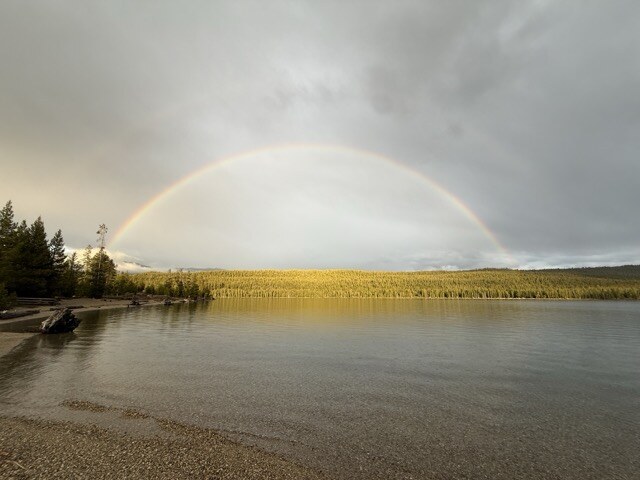
But… you don’t have to take my word… just go out and try it yourself and see how it feels. There isn’t any specific meditation technique, goal, or mantra. Just find whatever nature is around you - whether it is just a small patch of green or a glacial lake and let your attention wander. Sometimes, it can be nice just to let nature do the work for you.